A (mostly) Healthy Blog

Recipes, health tips & my wellness journey from a (mostly) healthy chef

  • Over the River and Through the Woods…

    I returned Sunday from yet another adventure, seeing more of the work being done by CCT’s Nehemiah Project!  After my last adventure, I thought perhaps I knew a bit of what to expect for the next trip I was embarking on.  I even packed differently, switching out my beat up Toms for my nicer ones, and packing a pair of heals to wear to the dedications, as I was the only one in flats at the previous ceremonies (athough, for the first time in my life I am considered tall, and in my flats am the same height or still taller than many of the women in their heals!)  I was heading to the provinces of Capiz (as in the Capiz shell, one of the sources of income) and Iloilo in Central Visayas – the seafood capital of the Philippines!  Project Manager Anna Mae who accompanied me on my last trip was supposed to be meeting me in Roxas City, Capiz, but last minute she was needed at the office in Manila to prepare for meetings with sponsors, so she sent me off alone.  After some persistence/near insistence (after the last trip I wasn’t taking any chances), she assured me that the local Nehemiah team would meet me at the airport and take great care of me during my stay. 

    The flight to Roxas City, Capiz was beautiful – I flew over larger islands with rolling mountain ranges, small islands surrounded by turquoise water, and one island composed of a crater with a lake in the center, and a smoking volcano at the end of a peninsula.  As we approached Roxas City, I noticed that the landscape changed to a series of man-made ponds, which I later learned are where the indigenous Filipino “milkfish” are raised.  The airport was again small and sparse, and this time I was greeted by a mariachi-esque band of men and women playing instruments and singing.  Ates Connie and Sheila, part of the local CCT team, were waiting for me and recognized me by my “barbie-like” appearance.  They whisked me away to where we would eat our lunch – at the home of one of the community partners (since CCT operates as a coop, their “clients” are instead referred to as “community partners”).  We went to the home of a woman whose husband owns a boat and catches seafood for a living.  She is active in the community and holds fellowship meetings at her home.  She had prepared a seafood feast for us!  Steamed crab legs, crab bodies with a potato & carrot stuffing, milk fish soup, stuffed baby squid, fried baby squid, fried lumpia (Filipino egg rolls), and of course rice.  I used my few Tagalog words to try and express my thanks…”masarap” meaning delicious, and “salamat, po” – a formal thank you, and they were delighted by this! 

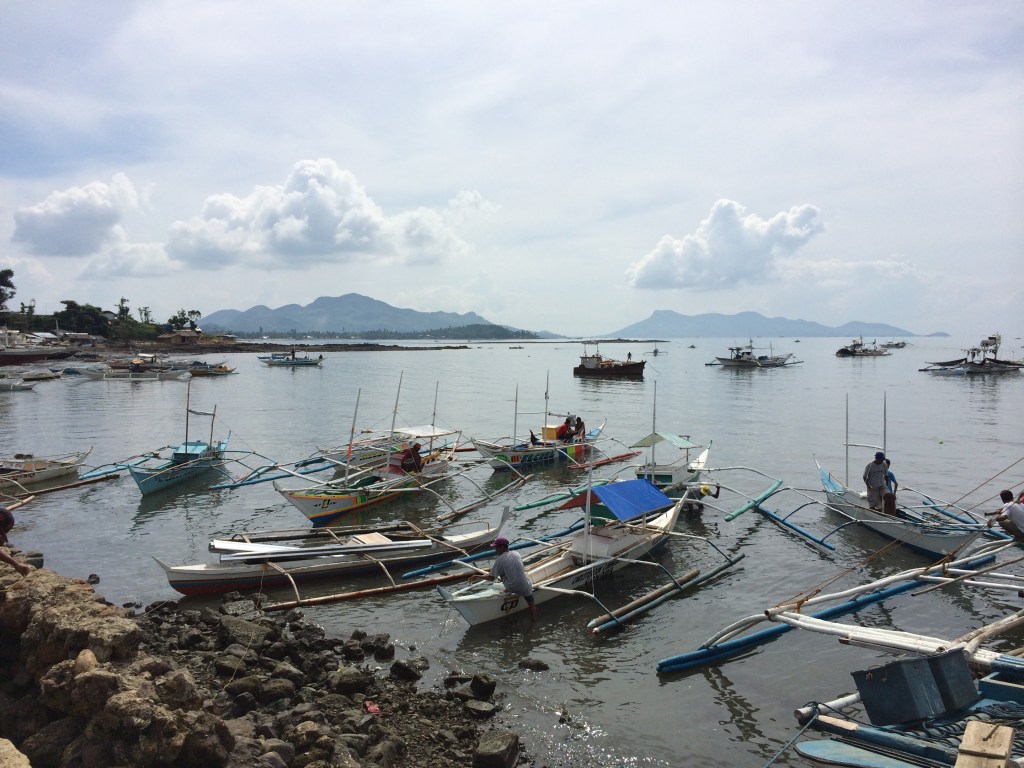
    Next we went to a dedication ceremony for the houses that had been rebuilt with funds from the Nehemiah Project.  We were right next to the ocean, with a view of the fishing boats that had also been newly rebuilt thanks to CCT’s ministry there.  I was introduced to all the Nene’s (mothers); community partners, many of whom were also recipients of the building materials.  Like the graduations I had attended in my previous trip, this dedication ceremony brought together the community, local officials, and CCT staff.  I was again introduced as a guest of honor, except this time Ate Sheila put me on the spot and asked me to get up and say a few words!  I didn’t know what to say (and don’t really know what I said!)  About 10 community partners at this location had been given P15,000 worth of building materials to restore their homes, and they all got up and shared their stories and expressed their thanks, often through tears of joy and triumph.  After the ceremony, we set out to see each one of these homes, ask God’s blessing on the home and the family, and the CCT staff insisted they take my picture with teach of the proud recipients.  And so started the “Barbie Goes to the Philippines 2014” photoshoot!

    So in comes my shoe choice…thank God at the last minute I opted for my Toms (albeit my nice pair) over my wedge sandals, thinking I’d be walking a lot in the airport.  To visit these homes we wove our way through villages or “barangays” on narrow dirt paths lined with curious locals, as we dodged stray cats and dogs, stepped over “free-range” chickens and roosters, and tiptoed through pig pens!  All the while trying not to step on any of the droppings of the aforementioned animals, as well as trying to avoid the small streams of sewage/water tricking down from pipes.  All the houses we visited were made of different combinations of materials, and all the partners mentioned that their houses were now sturdier than they ever had been before the typhoon.  Some were concrete with tin roofs, some brick, and some plywood.  Those were the tame ones.  Since the sea is the source of livelihood for most of these residents, the sea is where they live!  One house we visited was set right over the water on stilts – and we walked a zigzag bamboo plank for about 20 feet to reach this haven!  The bamboo creaked under foot, and the water was a murky brownish-green.  I prayed so hard not to fall in!   And can you imagine if I had been wearing heals?!  The house was made completely out of bamboo, which grows in the mangroves around the sea and is used in abundance. Thin bamboo strips were nailed together to form the exterior, while even thiner strips were woven together to form the walls and floors.  Even the furniture was bamboo!  The fishing boats also use long pieces of bamboo as added balance on either side of the boat.  After safely descending from this house and kissing the solid ground…well maybe I would have if it wasn’t covered in who knows what… we trekked up a small rocky mountain to reach the next house.  This one made of bamboo, wood, and a tin roof, and to descend the hill we climbed down a steep bamboo ladder.

    The next day there was another dedication ceremony in another barungay, this time on a mountain, followed by trekking up the mountain through tall grasses and again through chicken coups to reach the houses.  By the third dedication ceremony on my third day there I was a pro!  I had come to expect being asked to get up and say a few words, but at each dedication I could never anticipate the different testimonies I would hear from the grateful recipients and others who were touched by God’s work through CCT.  One town official said that in her 19 years of working for the municipality, she had never encountered an organization purely giving anything away to the residents without asking for anything in return.  She was so touched.  And I can’t get over the generosity of the people we met.  From the little they have, we were given snacks of rice cakes, candies, cookies, spaghetti, coconut custard, and a huge bag of prawns from our very last stop!  It was worth all the trekking through soiled streets and over murky water to meet these joyful Filipinos who finally have a secure shelter to call home, can get a good night’s rest to face a long day of work, and are part of this community that is working together by the grace of God to become whole again.

    On my second day in Capiz, we went to an early morning fellowship meeting – a weekly gathering of community partners that’s part Bible study and part savings collection/loan payment.  To get here I road on a small motorcycle, sandwiched between our driver, a young CCT team member named Milquy, and Sheila.  Some of the neighborhood kids were home from school with “Friday sickness,” and 2 neighborhood men decided to let down the roosters they had been carrying through the streets to engage in the first cock fight I’ve ever witnessed!  Later that morning we went to another savings circle/loan collection and this time to get there we drove in a tricycle – a small motorcycle with a sidecar attached to it.  The sidecar is about two and a half feet wide by three feet deep by three feet high.  At any time, these tricycles can contain the driver, 2 passengers sitting on his motorcycle seat behind him, 5 passengers inside the sidecar (2-3 on the seat, 1-2 facing them on the floor), a passenger sitting on a small rod on the side of the sidecar, 2 passengers perched on the metal protruding from the back of the sidecar, and 2-3 passengers sitting on the roof of the side car!  It’s like a clown car, only there’s no mystery to how many people are going to stumble out of it! 

    My third day, Saturday, we set out in the morning for the province of Iloilo.  We drove through field after field of sugarcane and corn, often with rolling mountains in the background.  In the town of Gogo we saw the houses that a CCT partner, the Union Church of Manila, had donated – 130 in total!  When we arrived in Eastancia, Iloilo, we met up with the local CCT staff there and set out for the small island of Loguingot.  We climbed down a rocky jetty to board a narrow boat, flanked by the steadying bamboo poles.  Our captain used an oar to get us out of the port, then a small motor took over for the 15 minute ride.  We reached the shores of the island and hit ground while we were still about 100 feet from shore; our captain brought another boat over to ours and half the crew transferred to that boat to lighten our load.  He walked us in as far as he could, and when we again hit the sand, we hiked our pants up to our knees, took off our shoes, and walked into shore.  One of CCT’s partners donated school supplies and backpacks to the children on this island, and we were bringing the second installment of these gifts.  The kids and families were so excited!  The kids signed their name as they were called to receive their new backpacks and supplies.  As we sat on the beach, one of the kids climbed up into a coconut tree and shook down coconuts for us!  One of the men got a machete-like knife out and cut a square into the top of the coconuts.  We poured the juice into a pitcher, and were given cups for the juice and spoons to scoop out the tender flesh.  It was so amazing!  The pulp that surrounds the inner shell I’ve learned is called “copra” and is the source of coconut oil.  I’ve seen this being dried on large tarps, and when I asked about it found out that after the pulp is dried in the sun it’s then sent to a processing plant where it’s pressed to extract the oil.  I’ve also seen lots of rice being dried in this way before it’s sent to be milled, and the husks are then fed to the pigs or turned into fuel pelts.    

    So speaking of food, the seafood here did not disappoint!  Thursday dinner and Friday lunch (so that I could see it by day and by night) we ate at a restaurant on the water where you walk up to a case of fish and seafood, choose what you want to order and how you want it prepared, and then it arrives on your table ready to eat!  We sampled prawn soup in a flavorful broth with water spinach.  Scallops the size of a dime served in the shell with garlic butter – so tender and sweet.  Grilled squid stuffed with chills and tomatoes, whole-grilled catfish and another local round fish, steamed oysters, and shell soup made simply of tiny clams in their own broth.  Almost always, food here is served with tiny lime-like citrus called calamansi, chills, sweet vinegar, and fish sauce or soy sauce.  In a small bowl you mix up a combination of those ingredients to suit your taste, then use it to season whatever you’re eating.  I’m obsessed!  The small calamansi, only the size of a large marble, add just the right amount of acidity to so many dishes!  I’m going to have to look into buying a calamansi tree when I get back to the states… Friday night we tried to go to a restaurant down on the bay but it was closed, so we ended up at sleepy resort in town.  We were seated out near the pool, under an overhang, where a few families were swimming.  We ordered garlic shrimp, native chicken soup, and fresh lumpia which are a type of crepe stuffed with shredded vegetables, and topped with peanut sauce.  Delicious!  While we waited for our dinner (which took about an hour – I guess they weren’t expecting many guests!) I looked up, and the ceiling was covered in lizards!  They range from 6 inches to over a foot long, and make a chirping noise, but they eat the bugs so I wasn’t complaining!  For lunch on Saturday we went to a gorgeous resort in Iloilo overlooking several islands.  We had milkfish soup, and fried chicken, calamari, and prawns.  The prawns were battered and fried whole – head, tail, and shell-on.  At first I attempted to remove the shell, but it was difficult because it was encased by the batter, and I ended up getting so little flesh.  I covertly looked around to see what everyone else was doing, and in the mix of calamari and fried chicken couldn’t quite tell.  So I tried a bite with the shell from the center portion, and it was good!  Crunchy and flavorful.  I know that the most flavorful part of the prawns are the heads, so my next piece I got a little more adventurous and tried a bite where the body meats the head.  This was also delicious, so my next bite a tried the whole head!  It was so good!  By the end of the meal, I was eating the entire thing…tail and all!  I should mention that food here is so inexpensive – a typical meal out costs about P200 per person, about $4.50!  Saturday night we returned to the CCT office with the bag of prawns we had been given, and a few of the team members hung around for dinner.  Genesis, a recent graduate and new recruit, cooked the prawns in the rice cooker since it was the only cooking element there.  He flavored the prawns with sprite (which I’ve learned is the secret ingredient to many dishes!) and a magical flavoring packet called “sarap”, which I was informed by Sheila , “makes everything taste so good without even adding salt or anything else.”  That’s because the ingredients includes iodized salt, MSG, and chicken flavoring!  There are whole isles in the grocery stores devoted to this type of seasoning!  We rounded up all of the food we had been given and had quite a feast.  During these meals and during my trip, I got the chance to talk with a lot of the CCT staff, hear their backgrounds, the joys and struggles of working in this field, and their prayer requests.  And above all I noticed how joyful they are!  They love to laugh, are constantly teasing each other (much of it had to do with me because the boys kept secretly snapping candid photos of me!)  And almost everywhere I went, the first question I was asked was if I am single!  Filipinos are obsessed with this fact, and not only directed at me, but to anyone new they meet!  (Don’t worry mom and dad, it’s not making me want to start dating here!)  It was quite a trip to say the least!  And now I have an even better understanding of the work being done there, which will help me in reporting back to all the donors and sponsor organizations. 
  • Livelihood, Skilled Workers, Infrastructure

    The Visayas region, the middle of the Philippines’ three regions, took the brunt of the damage when mega-typhoon Yolanda hit the Philippines last November.  Center for Community Transformation (CCT) responded by meeting with local officials in some of the hardest hit towns to discuss both immediate relief and long-term recovery.  All of these towns had similar needs in the wake of Yolanda: livelihoods needed to be restored, infrastructure needed to be re-built, and skilled workers needed to be trained. What ensued is now called the Nehemiah Project, and to me it’s one of the most exciting projects I’ll be working on at CCT.  Let me backtrack a minute.  CCT has, for several years now, had a technical-vocational school for the sons of, and for the micro finance partners themselves in some of their poorest regions.  The young men can’t afford to attend college and have no hope of employment.  The fathers who enroll are often in the same situation.  The tech-voc school is paid for by CCT, and these men are given the chance to take courses in carpentry, plumbing, electrical maintenance and installation, and masonry.  After completion of each segment they take the TESDA exam to become internationally certified, and then are given an internship with a company in their field (which often turns into a job offer.)  Without this training, these men often become another one of the thousands of poor and street dwellers that Manila is notorious for.  The graduates of this program are often so thankful for this training that they become teachers at the school! (and now for the Nehemiah Project, which I’ll now get back to.)  So starting last week and for the next few weeks, I’m traveling to the different areas in the Visayas region where CCT has Project Nehemiah outposts.  Last week I went to the regions of Eastern Samar, one of the bottom three poorest regions in the Philippines, and then to Leyte.  I flew out Thursday afternoon for Tacloban, and I knew before-hand that once I landed it was a 6 hour drive to Eastern Samar, but I was told that Ate Pet would be meeting me at the airport (and I assumed driving me to Eastern Samar.)  The Tacloban airport is a bare-bones building with a tin roof, open sides, and one conveyor belt for baggage.  The bathroom had a large water bucket fed by a hose that before and after each flush, I had to scoop out some water and dump it into the toilet (which was a low bowl, no seat.)  This meant that the whole bathroom floor was flooded because people often miss the bowl when dumping in the water!  What they lacked in amenities, they made up for in charisma though…as we de-planed, all the airport personnel sang us a welcome song with a corresponding dance!  I texted Ate Pet that I had arrived, and thought it a bit strange when she replied in Tagalog.  She told me Ate Regie would be picking me up, and I found her soon after.  We got into a Jeepney together, and Ate Regie informed me that they were expecting the Filipino Ashee from the CCT office!  They must have been surprised when a white-skinned, English-speaking, blonde walked off the plane!  Ate Regie’s English was not great, (and my Tagalog has grown by about 5 words), and I though she was telling me that we were going to take the Jeepney all the way to Eastern Samar!  Instead, after about a 30 minute ride, we arrived at the “Van Van” terminal.  The Van Vans are Toyota mini-vans that they cram 5 rows of seats into, spaced about 2 feet apart.  Ate Regie led me to a Van Van and told me she’d wait with me until it left.  I thought I had missed something…where was I going?  When would I get off?  Who would be awaiting me in Eastern Samar?  Who did I pay for the ride?  How long would it take?  She finally answered these questions, gave me the cell phone numbers of the local Nehemiah team and put me on the phone with Ate Sheira who told me to get off at the Van Van terminal which is the last stop in Eastern Samar, and that Josh, one of the Nehemiah managers would pick me up.  I found out that it would take about 4 hours, but we couldn’t depart until all 15 seats were filled.  I started getting texts from the team telling me to be safe and that they were praying for me.  We finally got going, and after filling up at the gas station, 2 more passengers were banging on the door to be let on the van!  The driver finally agreed, so they squeezed into non-existent seats.  This began the bumpiest ride of my life.  Most of the roads were unpaved and had more potholes than I’ve ever experienced.  That, coupled with a seat that bounced up and down, and very bouncy suspension on the Van Van, I might as well have been in a bumper car for 5 hours!  And the facilities at the Van Van terminal made those at the airport seem first rate, so let’s just say I endured this ride with a full bladder! We had to pass several security check points and let passengers on and throughout the drive, and finally at close to 11pm we arrived at the Van Van terminal.  Josh came to pick me up in a pedicab, and I was so glad to see him! 

    The next morning Josh, Anna Mae who heads up the Nehemiah Project, and I were joined by Yup, the project director of Woord en Daad – a partner organization on the project, and we were picked up by two directors from ZOA, another Dutch partner organization.  We were heading to the first commencement ceremony for the Skilled Workers of the Nehemiah Project in Hermani, Eastern Samar.  As we drove along, I started to notice that all of the roads were being paved.  I started asking about the road work, and learned that it was all funded by the US government…our taxpayer money!  I soon started seeing large signs that said “Funded by the American People.”  Some were being paved with asphalt, and others with concrete.  I asked about this, and they said that for the most part, the material chosen matches what currently had been used to pave that area, however concrete is preferred, and is usually chosen in the areas where voter turn-out is higher (and the mayor’s opinion is stronger.)  Many of the bridges had been washed out, as was much of the earth on the sides of the roads.  Small shacks that serve as houses had largely been re-built, and often the roofs consisted of tarps from various relief organizations, their logos marking their presence in that region.  At this stage, shelters have been restored to residents, but the towns are still in shambles.  Schools, churches, markets, and community centers all needing to be rebuilt. 

    Which brings me back to the Nehemiah Project.  The residents that lost their livelihoods (smalls stands selling food, produce, or other goods; fishing boats) needed their livelihoods restored.  The towns need their infrastructure rebuilt (schools, churches, markets, community centers), and a fleet of skilled workers would both serve to restore a means of livelihood, and the workforce to rebuild these towns.  Several international NGO’s have partnered with CCT to provide funding, both the training and TESDA certification are provided to the students free of charge, and the graduates of CCT’s tech-voc school have become the teachers and counselors for these students!  They receive training in either Construction Building and Materials, Electrical Maintenance, Plumbing, or Masonry, and upon graduation will be employed by the local government to start rebuilding their town!  The graduation we attended in Hermani was housed in a community center on the beach.  Basically all the buildings and houses in this town are right on the beach, as the landscape is a long stretch of sand and then mountains, and the main source of income is fishing.  The graduates ranged from young 16 year olds to men in their 50s or so. The graduation the following day was on the campus of Eastern Visayas State University.  This school had been severely damaged and was closed for 3 months.  Many students, both male and female, enrolled in the skilled workers program while they couldn’t attend regular classes, and as part of their hands-on training, started rebuilding some of their school!  That graduation took place in the school activity hall, one of the buildings that the graduates had repaired.  The school has just received funding to start more repairs, as has the town, and this new fleet of skilled workers is who they will employ!  All of the graduates, over 100 at each location, were so excited, and for many of them this was the first time they had ever experienced getting any sort of degree!  The ceremony brought together the townspeople, local government officials, the provincial directors of TESDA, directors from the University, partner organizations, and both local and regional CCT staff.  The graduations were more like church services and gave all the glory to God.  I was so in awe of the way that God has used CCT’s presence here because of Yolanda to make his mercies known, and bring people to himself!  Everyone who got up to speak was so thankful that CCT had chosen to work in their town and to partner with them.  Throughout the graduation I was recognized as a “representative from PEER Servants in the US” and thanked for attending!  This was so unexpected!  I was also later informed that everyone, repeatedly, kept commenting about me that, “she looks just like barbie!  Her eyes are so round, and her hair is so blonde!”

    Aside from training skilled workers, the Nehemiah Project also restores livelihoods in the areas of buying new boats for fisherfolk, and organizing coops for the fisherfolk and traders to pool their resources to start other non-fishing enterprises in the the areas of farming and transportation.  And in all of the Nehemiah Project areas, the first services that the residents are encouraged to participate in are savings programs (so that if another natural disaster strikes they have savings set aside, accruing interest), and Bible studies.  It is a truly comprehensive program, helping the spiritual and material needs of the individual and the community. 

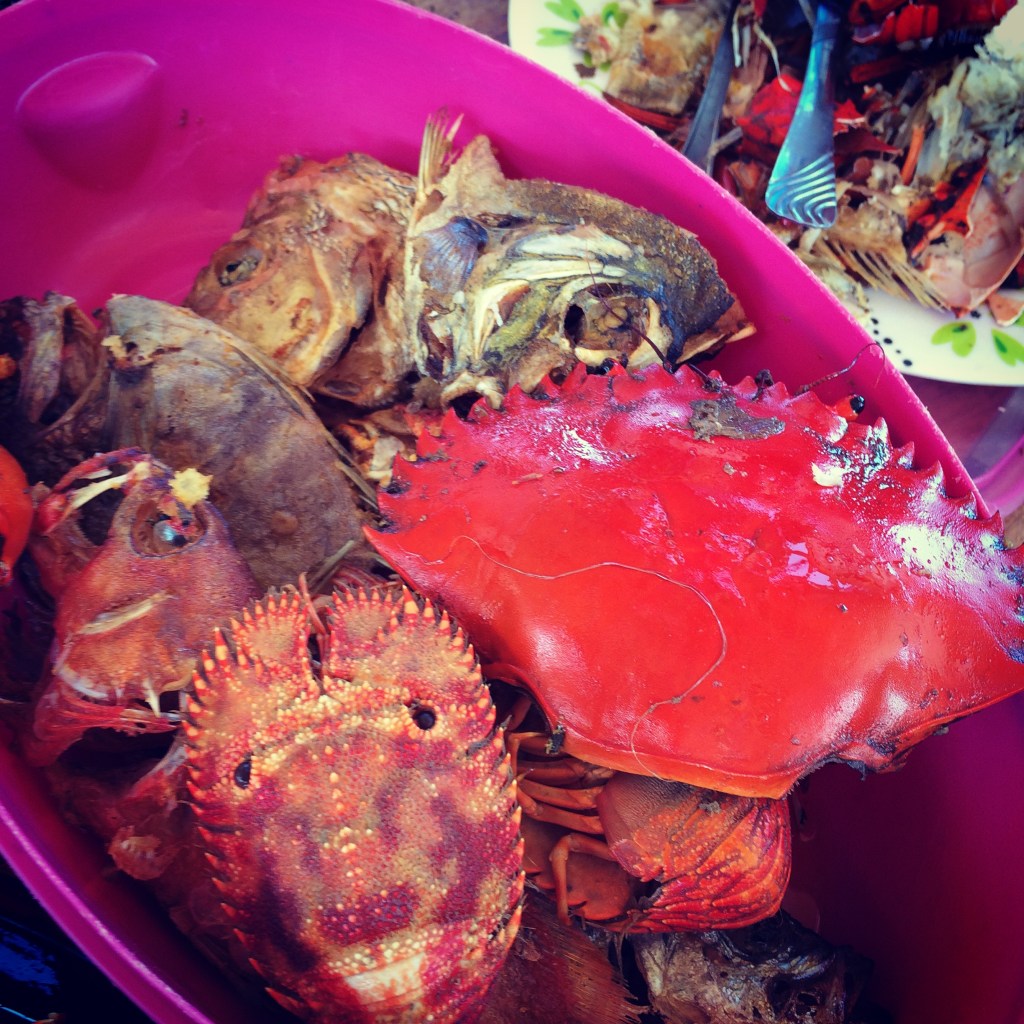
    After the graduation in Hermite, Eastern Samar, we walked down the beach to where there were small shacks with picnic tables inside.  The shacks were made of various parts of coconut trees!  The local fisherfolk, to show their appreciation, caught and cooked us crabs, spiny lobster, octopus, and assorted whole fish.  One of the CCT staff had cooked literally a bucket full of rice, and this whole meal was cracked and eaten by hand.  It was the most amazing seafood I’ve ever had in my life!  The crab and lobster was unbelievably sweet.  I sucked every last drop of juice out of it!  The fish was so flavorful, and the octopus was so tender.  And after we ate, we just washed our hands off in the ocean!  The water was crystal clear, and very shallow for about 50 feet.  After this was a sand bar with sand/rock formations rising up about 30 feet.  At the base of these were deep pools of aqua water.  Beyond these sand bars started the deep ocean of various shades of aqua and dark blue.  It was so stunning, and even though I was fully dressed, I wanted to run out to the sand bar and go for a swim! 

    That afternoon we drove to another town where we would spend the night at a woman’s house-turned inn.  After Yolanda she opened her home up to guests, and one of the relief organizations set up their headquarters there.  It was a really tranquil setting, and rice patties extended as far as I could see out the back of the property.  Anna Mae and I shared a room as it was the only one left with air conditioning (it was in the 90’s, and the wet rice patties are breeding grounds for mosquitoes!)  The room was modest but clean, with a set of bunk beds with mis-matched sheets, but I noticed there was no bathroom.  Anna Mae showed me where the “WC’s” were…and now I know where water closet got it’s name!  In the middle of the property there was a row of three rooms.  They were about 10 feet long and 5 feet wide with tiled floors.  Some had a toilet at one end, others just a hole, and there was a low faucet on the side of the wall, a large bucket, and a small bucket.  Once we settled in Anna Mae told me she was going to take a bath.  I thought this sounded like a great idea, considering I was covered in sweet seafood juice.  I went in search of a bathtub/shower but couldn’t find one.  When Anna Mae returned I asked her where the bath was, and she told me she had already showed me where the “WC’s” were!  It was one stop shopping here – use the toilet, take a bath, brush your teeth (by bringing in a cup of potable water, rinsing your mouth with it and spitting it on the floor inside the WC!)  We had a simple but delicious dinner of whole grilled fish, braised chicken (that I later found out was cooked in a Sprite-like soda), steamed okra, and of course rice!  The next day while eating lunch at a restaurant called “Crocs,” I was the only one from our group to order the crocodile!  It’s farm-raised in nearby Palawan (another Nehemiah area I’ll be visiting in a few weeks), and it was delicious!  As the sun set over the rice patties, large lizards that make a loud squeaking noise started appearing on the walls.  Josh came running out of his room and said that there was a frog inside, and he is afraid of frogs!  Yup, our Dutch companion in his 60s, informed us that he’s also afraid of frogs, so Anna Mae and I went in to rescue Josh!  I pinned the frog behind the dresser and tried to fish it out with an umbrella.  When it had no where else to go, it jumped on top of me, over the bed, and under the other dresser!  Finally the inn owner came and caught it.  The next night as the sun set on the campus, I was walking around and noticed a toad.  All of a sudden I realized that they were everywhere!  About 20 of them just on the one stretch of sidewalk where I was walking!  I also saw huge spiders, and a lizard that was over a foot long that had perfectly camouflaged itself to match the cream colored facade of the student center. 

    After leaving the inn in the morning to drive to the second graduation at the university in Tanauan, Leyte, we drove through some of the most stunning landscape I’ve ever seen.  Jungle-like mountains rising up out of aqua water.  Huge  rock formations with hidden caves.  It looked like the Amalfi Coast combined with Cinque Terre, only where in Italy there are brightly colored houses dotting the landscape, here there are shacks made of relief tarps, coconut branches, bamboo, cardboard, and tin scraps.  I saw where beach resorts once were, where boats used to take people to explore the hidden caves, and markets used to sell the freshly caught seafood.  Despite all this devastation, the people’s spirit has not been crushed.  The mayor who spoke at the graduation at Eastern Visayas State University said that where before they had only a single-level health clinic, their new fleet of workers will now build a two-story hospital.  And the old market that is no longer will be replaced with a hyper-mart. 

    I spent the last night of our trip in a hotel that this time had an in-room water closet.  Thankfully the water didn’t travel all the way into the room itself!  The sheets were stained, the floor was dirty, and the inn on the rice patty now seemed like a palace.  But I was thankful to have a roof (not a relief tarp) over my head.

    I’ve been here for three weeks now; I’ve learned how to say “I like fruit and vegetables” in tagalog “gusto ko ng gulay at prutas.”  And I am learning ever more to continually put my trust in God and look to him for protection, guidance, wisdom, strength, and comfort.  All while praising Him for this insanely beautiful country he has made!!

  • Culture Shock

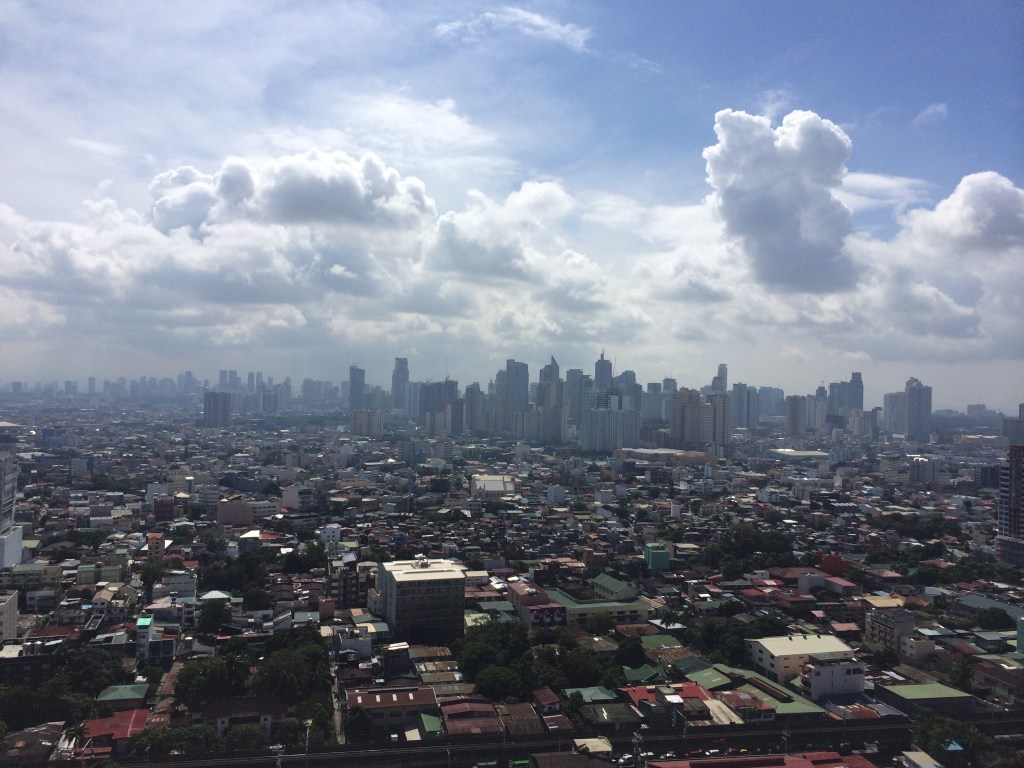
    All I can say is that nothing could have prepared me for what it’s like here in Manila…I’ve been both pleasantly surprised and often heart-sick.  It’s hard to put into words what it’s like here, and all that I’ve seen and experience so far, but here goes.  Manila is SO crowded and SO big, and from what I’ve seen the Philippines in general is SO crowded.  I arrived in Manila early Monday morning and the city was still recovering from Typhoon Glenda, while bracing itself for Typhoon Henry.  The sidewalks were covered in branches that had fallen from the trees, but slowly they’ve been cleared away (I think people take them to use as fire wood to cook over).  Walking around my area of Manila is just such a culture shock.  The sidewalks (where there are sidewalks) are full of street vendors, and the streets are full of fast food – McDonalds, Burger King, Wendy’s, ChowKing, and JolleyBee.  My neighborhood is full of college kids and working class, and it’s a generally safe area aside from the ubiquitous pick pockets. But having this be my entree to Manila was like being dropped off in Harlem and thinking that all of NYC is like that! I’ve since found other areas of the city…the Soho’s, financial districts, historical districts, garment districts etc.  My condo is on the 34th floor with stunning views of Manila and Manila Bay.  There are huge barges on the bay that look like battleships.  When we were hit on Tuesday and Wednesday by the outskirts of Typhoon Henry, the wind was incredible!  I’ve never experienced rain like it rains here – one minute it’s blue skies and sunny, and the next minute there’s a deluge.  And the water just pools on the streets, collecting dirt and trash until it forms a stagnant pond.  My condo has a roof deck with a swimming pool, and after hunting around I found a yoga mat that I take to the roof to do pilates!  I have gotten some pretty strange looks so far, but that’s not stopping me!  My roommate, Sara, is 22 and from Singapore.  We got along instantly…in part because she likes to explore!  On Monday after I settled in, she took me out for my first taste of Manila.  Within just a few hours of being out, we had already taken 4 modes of public transit – the FX which is a small shuttle bus that cost us P15 (about 35 cents), the MRT which is one of the subways, a jeepney which costs P8 (18 cents), and a taxi which cost about $2 for a 15 minute ride.  The jeepney’s are crazy!  They’re modeled after US tanks from WWII, and are long vehicles with open backs and a bench seat along each side.  Each one is uniquely and lavishly decorated, usually supporting a theme, and often these themes have to do with God (it is a Catholic country after all).  The destination is written on the front and side, and to hail the one you want you stand on the street and hold up your hand, or if you’re with a group you hold up the number of fingers corresponding with how many of you there are.  If there’s room on the jeepney, it slows down (note, it doesn’t actually always stop), you hop in the back, and crab-walk scrunched down along the middle isle until you find a spot on the bench to squeeze into.  You then tell the driver your destination, pass down your payment saying “payad po”, and then when you want to get off you either tap the roof or yell “para po”, and the jeepney slows down a bit and you hop off the back.  They are efficient since there are so many people, and traffic is horrible!!  The sides are completely open so it’s been on these rides that I’ve experienced the pollution the most (the exhaust from these is jet black and comes out in big puffs).  I’m going to try and take as many photos of the different designs as I can!  There don’t seem to be any traffic laws here, nor are there crosswalks.  People just dodge cars as they maneuver across the street! 

    Malls here are huge – our neighborhood mall is 5 levels with 1 level devoted just to tech stores, and this isn’t even the biggest mall!  I can’t believe all the US stores and restaurants – Starbucks, Dunkin Donuts, Java Juice, Auntie Anne’s Pretzels, TGI Friday’s, Red Mango, Aeropostale, Crocs…the list goes on.  At the grocery stores there’s Quaker Oats, Smuckers jam, Honey Nut Cheerios, and I even found Braggs apple cider vinegar!  So much of Manila and the Philippines is more “westernized” than Europe (not that I’m at all advocating Dunkin Donuts opening up in Rome!)  I purchased a local SIM card a pocket WIFI that provides internet when I have it turned on, but the signal is generally pretty weak.  Internet across the board here is a lot slower than at home, probably because there are so many more people trying to use it!!  I’m so thankful that Sara knows how to get around, and she’s thankful for my “white skin” because she says people are nicer to us when we have to ask for directions or don’t understand the language.  I am trying to learn Tagalog, the local language!  All the signs here are in English as it is the national language, but people here do not like to speak it.  When they have to speak English, they refer to it as “getting a nose bleed!!”  My poor co-workers for the next 10 months…

    Tuesday morning started my “exposure” week to the ministries of The Center for Community Transformation (CCT).  My driver all week was Kuya Art (Kuya is the polite title for a male elder, Ate for a female).  Ate Elvie was my guide, and she’s a little ball of energy!  We went to the 2 locations of the boarding schools that I’ve been working on the crowdfunding websites for – Puypuy and Magdalena.  Both areas were heavily hit by Typhoon Glenda, and were bracing themselves for Henry.  Electricity was still out.  All along the roads there were trees uprooted and all the banana trees were broken in half.  Those are the livelihood of so many of the people in this area.  I know that a country’s geography plays such a large part in it’s economic standing, but I was really struck first-hand with why a country in a typhoon belt remains a third world country – the people can never catch a break!  Despite all the devastation, I could tell how immaculate they keep the grounds at the schools.  The kids were still smiling and are so precious!  Their swimming pool was black from debris and branches, and just as I arrived we learned there was a 6’ snake in it!  There were 2 Dutch girls who arrived there the day of the typhoon, and the roof of the guest house where they were staying was ripped off only minutes after they were brought to the canteen for safety.  It was so amazing and somewhat surreal to actually be at these schools after hearing about them for so long while working on the website, and picturing what they would be like.  For lunch we went to a restaurant where the tables sit on small huts that are floating on a fish pond!  I got to taste some of the local dishes including seared pork, vegetable curry, tamarind soup with tuna belly, and chicken adobo.  And all served with lots of rice!  Rice is eaten 3 meals a day, and is also a main ingredient in many snacks.  Fresh coconut (buko) grows abundantly, and I also got to try buko pie.  It’s a top and bottom layer of pastry crust, with a filling of thin slices of fresh young coconut and custard.  So good!! 

    The next day we toured CCT’s AU Factory in Dasmarinas, Cavite.  This factory was taken over by CCT 2 years ago, in 2012, under the leadership of Kuya Froi.  The factory was under-performing and the owner decided to close it, causing 1,500 workers to be out of a job.  CCSC, the Coop branch of CCT, took over the factory as a sub-contractor and opened back up with an initial 57 employees.  Operating as a coop, the employees are co-owners, thus sharing in the profits and becoming more motivated to be productive workers.  The workers have daily devotions in the morning and during breaks, are required to purchase health insurance and life insurance, have access to buy affordable housing, have access to loans through CCT credit coop, and enjoy profit sharing.  The factory is now back to employing the full number of people, and productivity has more than doubled.  They now own all the equipment and were still able to turn a profit.  There are managers for the lines, who resolve conflicts.  There is quality control on each line, cutting rooms, CAD rooms (with computers that draw the patterns),  hand-sowing rooms, packing rooms, and a showcase.  When the finished packages are inspected, if there is one problem, all the boxes are opened.  If a product is delayed and the deadline isn’t met, it costs the factory, not the client, and the factory has to send it by air instead of by boat (the recent typhoon that cut power to Manila meant the factory had to stay open over the weekend.)  The brands that are made include Max & Co, Ralph Lauren, Pilcro, Anne Taylor, and merchandise for Urban Outfitters and Anthopologie.  This factory is the minority, but has gotten much attention.  Former street dwellers who are part of CCT’s “Kaibigan Ministry” (which mean friends in Tagalog) are given a 2 month training, and if qualified are employed in the factory as well.  There are 2 more factories owned by CCT, one smaller that makes powdered food products, and one larger.  The scraps from this factory are given to CCT’s Kaibigan Center where the women turn them into rugs.  It was so amazing and exhilarating to learn about this work that CCT is doing, and made me so excited to be working with them!  I also visited their new community center in this area, and another micro-fi branch. 

    Thursday we went to the G54 Parola Fellowship.  This area of the city is walled in, and each entrance or “gate” is assigned a number.  The night before my visit, I was told by my neighbor who works for CCT that this is where the pedefiles, killers, and thieves live.  It was very dirty, there were naked children walking around and many stray dogs.  There was a wake being held, and a coffin with the dead man was on the side of the pathway, there was a cup out for money, and there were a bunch of men playing cards across from the coffin.  The branch here has a pharmacy, medical clinic where they perform procedures and check-ups, and holds 8 fellowships per week.  There are up to 13 women in the fellowships, which is the maximum number.  I interviewed a few of the women and also Kuya Daniel who took his first loan out from CCT 15 years ago for P1,000 ($23) when he only had P700 ($16) to his name.  He most recently took out a loan for P200,000 ($4,600) to expand his grocery business to a second stall, and now employs 6 men!  Through CCT he became a Christian and has learned to entrust everything to Christ.  He is now a mentor to new community partners.  One of the women had a young daughter, maybe 3 years old.  When I went upstairs, the girl asked where “Barbie” went to, and put her hair in a braid like mine! 

    Our next stop was CCT’s Kalaw Feeding/Savings Circle.  Of the over 200 street dwellers that gathered here for the feeding, about 25 are involved in savings circles.  They saved anywhere from P20 to P1,000!  There was a Bible study and I got to hear the testimonies of a few of the women and Kuya Frank, a former street dweller who is now staff of the Kaibigan Ministry at CCT!  He was born and raised on the streets – 14 years.  He was addicted to solvent and either had to steel or work hard to survive.  He started coming to the feedings and then went through CCT’s Kaibigan program.  He showed me a video on his smart phone that CCT made about his story, and he said that despite how materially better off he is, he’s most thankful for the spiritual transformation.  His wife was also in the same situation as he was, and now they are married and she works in housekeeping with CCT.  I also met a parent of one of the boys at CCT’s boarding school Magdalena!  Her son has been in the school for 3 years now!  There is one more girl headed to the boarding school in Puypuy as soon as the electricity returns.  During Typhoon Glenda she was found huddling on a sidewalk under an umbrella.  A few more girls were supposed to go, but now their parents don’t want them to.  I met another woman who kept asking me if I liked her dog, and it was cute but the animals here freak me out.  It kept licking me!  I handed out all the bags of food as the names were called out, starting with the youngest children, then the women, then the men.  They received bags with rice and either sausage, fish, or a salted egg and tomato.  There was also a Bible study at the beginning of the feeding.

    Friday we went to CCT’s Retreat Center in Tagaytay where I’ll be helping with the bakery! 

    We met up with the 2 Dutch interns who had been staying at Puypuy, and also the daughter of one of the CCT board members came with us.  She’s 22, and so sweet; she lives and works in Germany now, and it was fun to talk to her about the Philippines and Europe.  We got a tour of the retreat center – it is so beautiful!  When Typhoon Glenda hit, there were over 400 guests and they all had to congregate in the large function hall.  The canteen across from them had all the glass in the large windows completely shattered.  The guest houses that were built by the Kaibigan workers (former street dwellers) survived with minimal damage, while those built by the commercial builders had their roofs ripped right off!  The slogan for the rebuilding project is “build back better” and they’re only employing the Kaibigan workers! They sell goods from local farmers, like moscovado sugar, coconut sugar, whole grain rice, dried fruit, and coffee.  All kinds of groups come to stay here – church retreats, couple retreats, corporate retreats.  People rent out the amphitheater for weddings and have the reception in the break room.  There are 2 basketball courts, a rec room with games and game tables, and a soccer field.  The rooms are gorgeous as is the artwork everywhere.  Our next stop was the Taal volcano – the world’s smallest active volcano.  It sits upon Taal Lake and there are tiny islands off the mainland, and people live on them!  We were supposed to hike it and you have to take a boat to get there, but there was a chance of rain so we couldn’t go.  Had an incredible view from where we ate lunch and then hiked up People’s Park for another vista.  We passed a ton of pineapple plantations and fruit stalls.  We stopped at one and I sampled the indigenous jack fruit, mangosteen, and lansones, as well papaya, mango, and pineapple.  Peanuts, cashews, and the local pili nut also grow here. 

    Saturday morning we went to the Kaibigan Ministry Center, KKMC in Cabrera.  This center is headed up by Pastor Noel and is the only Kaibigan Coop in the Philippines.  It is completely sustainable/self-sufficient.  The center is a half-way house for woman and children who have been taken off the streets and are in the discipleship program or are being screened to go to the boarding school.  There is also an elementary school in full operation.  There is a water purifying station which supplies the water for local CCT branches, a print shop providing much of the printed materials for CCT, and a taylor – all employing Kaibigan workers.  There are places for people to come in off the streets, take a shower, have a meal, and sleep.  But all very structured.  Street dwellers aren’t used to structure and often don’t know how to answer to authority.  Sometimes they don’t want to leave the streets because they don’t want this discipline in their lives.  Also, so many of the street dwellers came to Manila from the provinces seeking work and more opportunity, then got caught up in a bad crowd and ended up drug addicts and thieves.  At this center there is a multi-step process of discipleship, skills training, and transformation, and then they are either offered employment or offered the chance to return to their province (with free transportation), but only if their families will welcome them, a church body will support them and hold them accountable, and if there is an active micro-fi branch there.  After this I finally went to the CCT office, met my co-workers, and was greeted with a welcome lunch!  Everyone is so nice!  For celebrations they roast a whole pig, called Lechon.  There was also a bunch of fresh fruit and some local dishes.  The staff gave us welcome gifts, mine is a purse made from fibers from the coconut tree.  We took communion together before we then ate our meal.  Everyone is so joyful and thankful. 

    Early Sunday morning Sara and I went to the Legazpi Market in Makati, one of the business/classy districts of Manila.  There were organic farms selling fruit vegetables, and dairy, local products like coconut sugar and vinegar, and vendors selling prepared food.  It was amazing!!  There are so many fruits and vegetables that I’ve never seen before.  I bough Japanese eggplant, fresh bamboo shoots, baby bok choy, carrots, and water spinach, which I turned into a red curry.  Our condo has a sink and kitchen counter, and under the counter were unopened boxes containing a dual induction burner assorted pots and pans.  I opened them all up – it was like Christmas!  And now I’m going to make full use of our “kitchen!”  We went to Victory Church with Michelle, a colleague and now close friend of mine.  It’s part of a group of churches founded by an American pastor in 1984.  It was very modern and western – a bit too contemporary for my taste but neat to experience.  After church we had lunch in an area that reminded me of an outdoor shopping area in SoCal.  We ate at a tea room/cupcake bakery that was so adorable!  I felt so far removed from the hustle and bustle of Manila. 

    Monday I headed to the immigration office to extend my visa.  The office is located in the old district of Manila called Intramuros.  It’s walled in, and looks like what I envision Cuba to look like.  Spanish architecture from their reign in the 1600s.  Two of the original 8 churches still stand – the Manila Cathedral and the Cathedral San Augustin – both beautiful.    

    One cultural difference I’m going to need to get used to is that most toilet stalls do not have toilet paper!  Either you take paper from the sink area before heading into the stall, or there is a hose attached to the toilet to wash yourself.  Also, you do not throw the paper in the bowl, but rather in the trash can.  At the grocery store I found a portable mini toilet paper roll, so I’ll always be prepared!

    I have seen so much just in one week here, and while it’s been difficult at times, it makes me so excited to be working with such an amazing organization that puts Christ first!  Because ultimately, looking at just so much poverty, we can’t change the life on earth for all these people, but we can share the love of Christ with them and give them hope for eternity!